
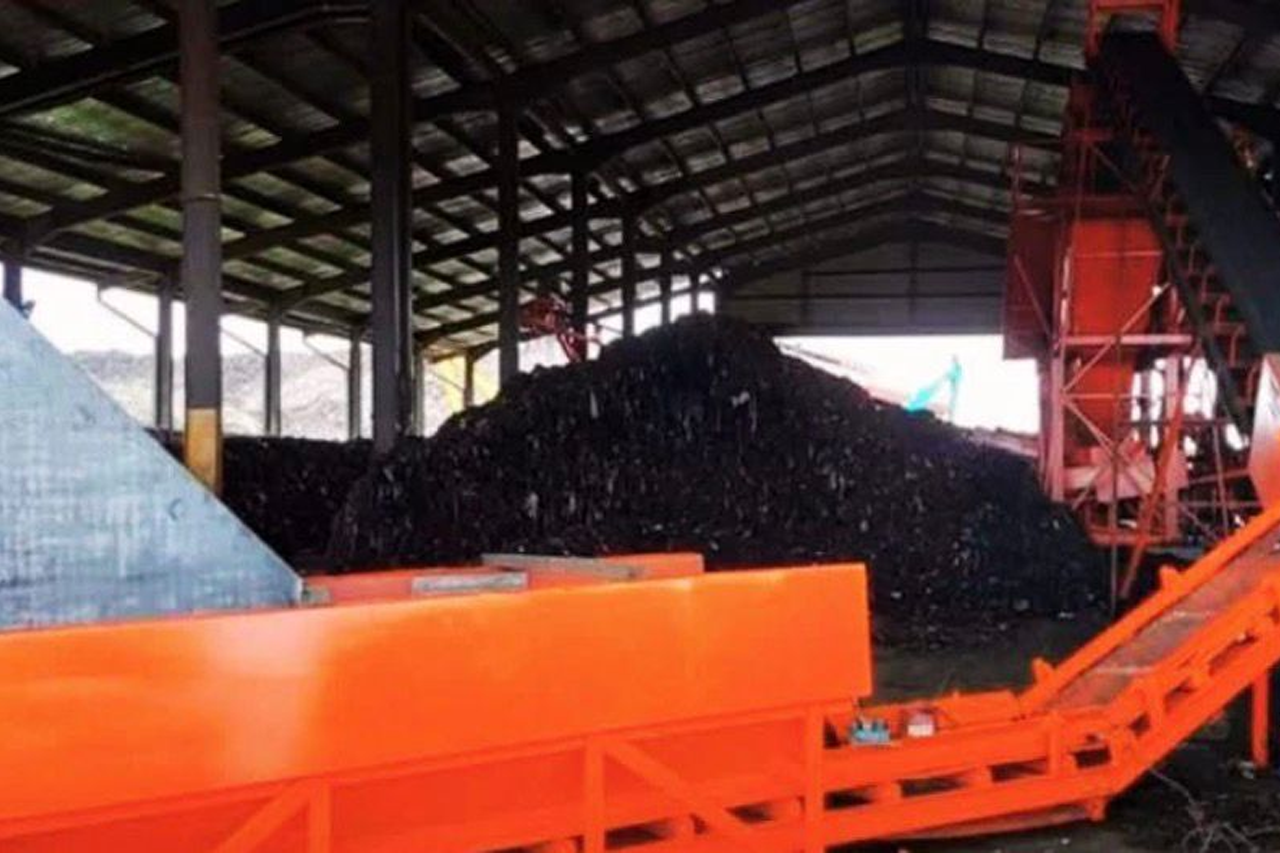
The Aluthwatta Waste Management Center, operated by the Kundasale Pradeshiya Sabha, is to undergo further development as its monthly compost production reaches between 150 and 200 metric tons.
The facility receives between 15 and 20 metric tons of biodegradable waste daily from seven local government institutions — the Pradeshiya Sabhas of Kundasale, Pathadumbara, Medadumbara, Gangawata Korale, Poojapitiya and Panvila, along with the Wattegama Urban Council.

Monthly biodegradable waste intake is estimated at approximately 600 metric tons.
All biodegradable waste collected at the center is processed into compost, with monthly production ranging from 150 to 200 metric tons.
The initiative is being implemented with the support of the Ministry of Public Administration, Provincial Councils and Local Government and the Clean Sri Lanka Programme.
Launched in 2025, the program aims to strengthen local authorities in waste management and reduce the volume of waste directed to sanitary landfills by 30% within three years.
Under a national project to construct 58 Material Recovery Facilities, the Aluthwatta center has been equipped with a new Material Recovery Facility valued at more than Rs. 80 million.
Officials said increasing daily waste volumes and expanded operations have created a need for additional development at the site.
Deputy Minister of Provincial Councils and Local Government Ruwan Senarath recently conducted an inspection visit with ministry officials to review operations and discuss further measures required for the facility’s expansion.
In addition to biodegradable waste processing, the center handles approximately eight metric tons of non-biodegradable solid waste daily, including plastic, polythene, cardboard, newspapers, tins and PET bottles. Recyclable materials with commercial value are separated and sold for recycling.
The government allocated Rs. 750 million for the Material Recovery Facility project last year. Allocations of Rs. 900 million have been made for 2026, with plans to allocate Rs. 1 billion in 2027. The project also includes rooftop solar panel installations to generate renewable energy at the facilities.